There is a particular kind of mental noise that can settle in during Ramadan, especially for a working Muslim woman. Your body is fasting, your heart wants presence, but your mind keeps running through deadlines, messages, meal plans, family needs, and the quiet pressure of wanting Ramadan to feel spiritually beautiful. Instead, the day can feel crowded. You may notice yourself scrolling without purpose, planning for problems that have not happened, or slipping into a guilt spiral because your energy is lower than usual. This is Ramadan work brain: fasting on the outside, but inwardly carrying a heavy mental load.
If that feels familiar, journaling can become more than a productivity tool. It can be a gentle act of muhasaba, a way to separate what is urgent from what is only loud, and a way to return your attention to Allah without pretending your responsibilities do not exist. Done well, journaling helps with Ramadan anxiety through simple prompts, eases fasting overwhelm and mental load, and gives structure to Ramadan work stress for the Muslim woman trying to hold many things at once.
Spot the signs of Ramadan work brain
Ramadan work brain does not always look dramatic. Sometimes it looks efficient. You answer one message, then another, then open your inbox again even though nothing truly needs your attention at that moment. You keep thinking ahead to the evening: iftar, dishes, prayer, taraweeh, sleep, tomorrow. If you live with the added pressure of a United Kingdom or United States Ramadan schedule, where work hours continue as normal while fasting hours and prayer times shift your day, the strain can feel even sharper. You are not simply tired. You are mentally overextended.
There are a few signs worth noticing. One is compulsive scrolling, not because you want information, but because your mind cannot settle. Another is doom planning, where every task branches into three future worries. A third is the guilt spiral: you feel bad for not being fully productive, then bad for not feeling spiritually focused, then bad for being bad-tempered about either. This is where journaling matters. It catches the pattern before it becomes your atmosphere for the whole day.
The goal is not to empty your mind completely. The goal is to stop letting every thought claim equal authority. Some thoughts are reminders. Some are fears. Some are just noise. Writing helps you tell the difference.
A three-part journaling flow for the middle of a busy Ramadan day
When your mind will not switch off, use a simple three-part flow. It should take no more than five to ten minutes. You can do it after suhoor, on a work break, in the car before going inside, or before taraweeh after work when your inner pace still feels too fast for worship.
Part one: What is loud in my head right now?
This is the offloading stage. Do not edit yourself. Write what feels repetitive, pressuring, or emotionally sticky. It may be practical: an email you forgot, a meeting you dread, groceries you still need. It may be emotional: resentment that others are asking too much of you, sadness that Ramadan does not feel how you hoped, anxiety that you are falling behind everywhere. Naming what is loud reduces its power. You are no longer carrying it vaguely; you are seeing it clearly.
Part two: What is Allah asking me to focus on in this moment?
This question changes the center of gravity. It moves you from reaction to niyyah. Not everything in your head deserves your energy right now. Perhaps Allah is asking you to be trustworthy in one task, patient in one conversation, restrained in one reply, or simply present in one prayer. This is not about becoming passive. It is about refusing to worship urgency. Through this kind of tawakkul journaling, you begin to ask not only what needs doing, but what obedience, sincerity, and steadiness look like in this hour.
Part three: What is one small intention for the next hour?
Keep it small enough that your nervous system believes it. Finish one document. Reply to one important message with calm. Rest for fifteen minutes without apology. Read two pages of Quran before opening your phone. Make dhikr while commuting. The point is not to design a perfect Ramadan day. The point is to stop scattering your attention and to choose one faithful next step.
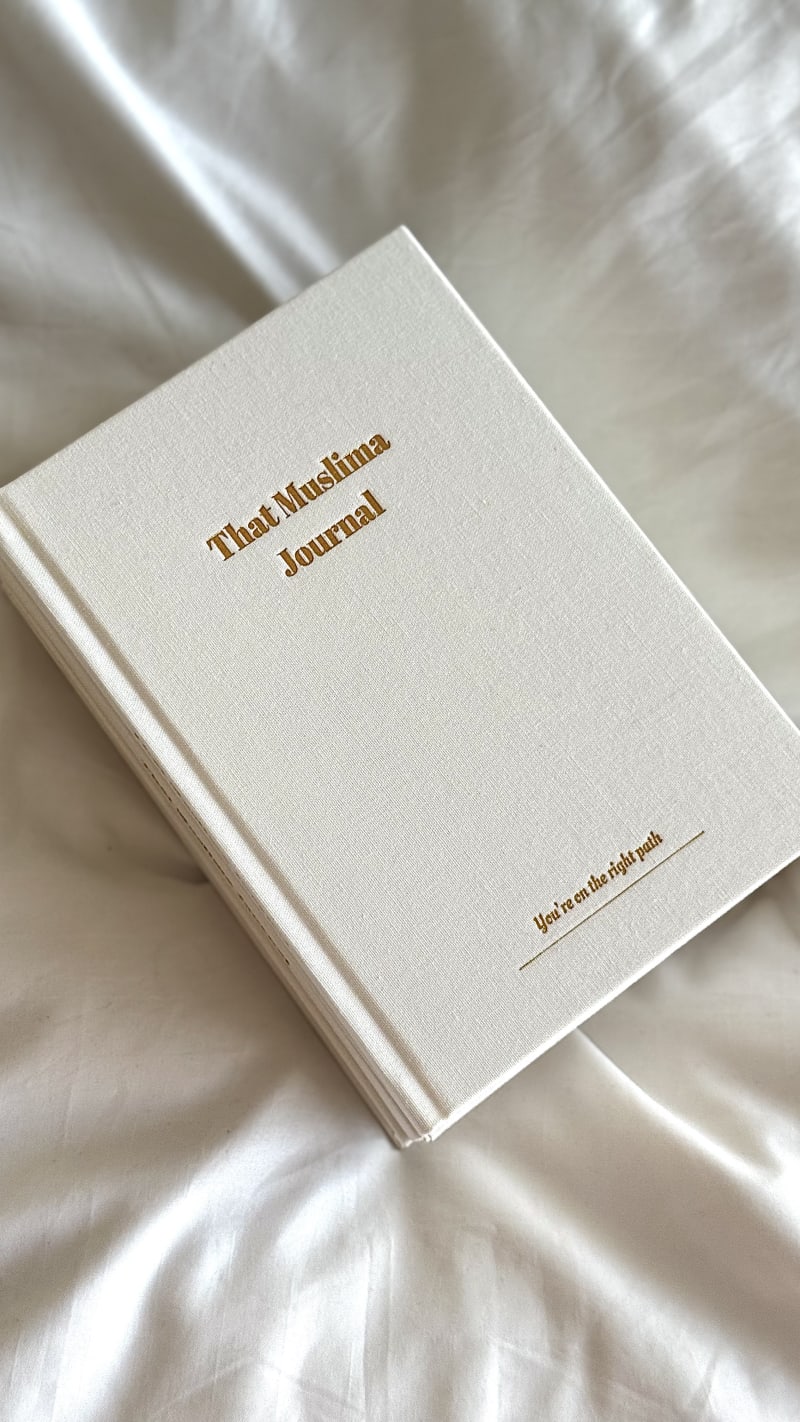
This is why a journal can be so grounding during Ramadan. That Muslima Journal works beautifully for this kind of reflection because it gives your thoughts somewhere to land before they start directing your mood, speech, and worship.
Productivity guilt, worship, and the reframe of rest
Many women carry a hidden belief in Ramadan: if I am not doing enough, then I am wasting the month. But often, what we mean by enough is shaped more by modern productivity culture than by sacred wisdom. We measure ourselves by output, visible effort, and how much we can fit into a day. Then Ramadan arrives and exposes the limits of that mindset.
Fasting changes your energy. Worship asks for inwardness. Life still asks for labor. If you do not consciously reframe rest, you may start treating your human limits as a spiritual failure. That is a painful mistake. Rest can be ibadah when it protects your patience, preserves your body for prayer, and helps you show up with a sounder heart. A quieter evening, a shorter to-do list, or a deliberate pause before iftar may be more pleasing to Allah than pushing yourself into irritability and resentment.
Try journaling this question: What kind of rest would help me worship Allah better today? Then answer honestly. Sometimes the most spiritual thing you can do is stop demanding from yourself what this hour was never meant to hold.
How to offload emails and messages without replying impulsively
One of the hardest parts of Ramadan work stress for a Muslim woman is communication overload. Messages arrive with different tones, expectations, and hidden emotional hooks. When you are fasting and depleted, it becomes easier to reply too quickly, too sharply, or with quiet resentment. Journaling gives you a buffer.
Create a page titled: What I need to say, what I do not need to send yet. Under it, write the email or text you wish you could send exactly as you feel it. Let the frustration come out on paper. Then pause. Underneath, write a second version: What is true, necessary, and dignified? This second version is often shorter, cleaner, and more aligned with who you want to be while fasting.
You can also use prompts such as: What about this message is triggering me? Do I need to answer now, or do I need ten minutes to regulate first? Am I trying to prove something, protect something, or communicate something? What response would let me leave this interaction without bitterness? These are practical Ramadan anxiety journaling prompts because they help you process stress before it spills into your relationships.
A short du’a log for daily stress points
Most people make dua for outcomes: let the meeting go well, let the problem be solved, let the person say yes. But there is something deeply healing about making dua for the stress points themselves. Not only for what happens, but for how you move through what happens.
Try a brief daily log with three lines.
Today’s stress point: What feels heavy or sharp right now?
My du’a for this stress point: Ask for clarity, patience, protection from anger, ease in speech, sincerity, or strength to accept what you cannot control.
What this is teaching me: Perhaps dependence on Allah, humility, boundaries, or the need to slow down.
This kind of log softens the heart. It reminds you that the purpose of the day is not merely to get through it, but to meet Allah within it.
A reusable Suhoor-to-Iftar reset checklist
To carry less mental clutter through Ramadan, end your journal entry with a simple reset checklist you can return to each day.
Suhoor: What is my niyyah for today? What one thing must not be crowded out by noise?
Morning work block: What is the one priority that deserves my clearest energy?
Midday check-in: What is loud in my head? What can be postponed, delegated, or released?
Before replying: Am I calm enough to respond with adab?
Late afternoon: Do I need a reset through dhikr, stillness, water preparation, or a short rest?
Before iftar: What am I carrying that I need to place before Allah in dua?
After work and before taraweeh: What would help my heart arrive, not just my body?
Before sleep: Where did I receive help today? What can I release tonight instead of rehearsing until morning?
Ramadan work brain is real, but it does not have to rule your days. Your mind may still be busy. Your schedule may still be demanding. But with a page, a pen, and a sincere intention, you can move from inner noise to grounded worship. Journaling will not remove every pressure. It will, however, help you carry that pressure with more honesty, more restraint, and more tawakkul. And in Ramadan, that shift matters more than perfection ever could.